
GENDER-BENDING: How Colonial Male Perceptions Have Distorted Our View of Gender Norms and Sexuality
- Amy Underdown
- Jun 16, 2021
- 6 min read

Updated: Jun 21, 2021

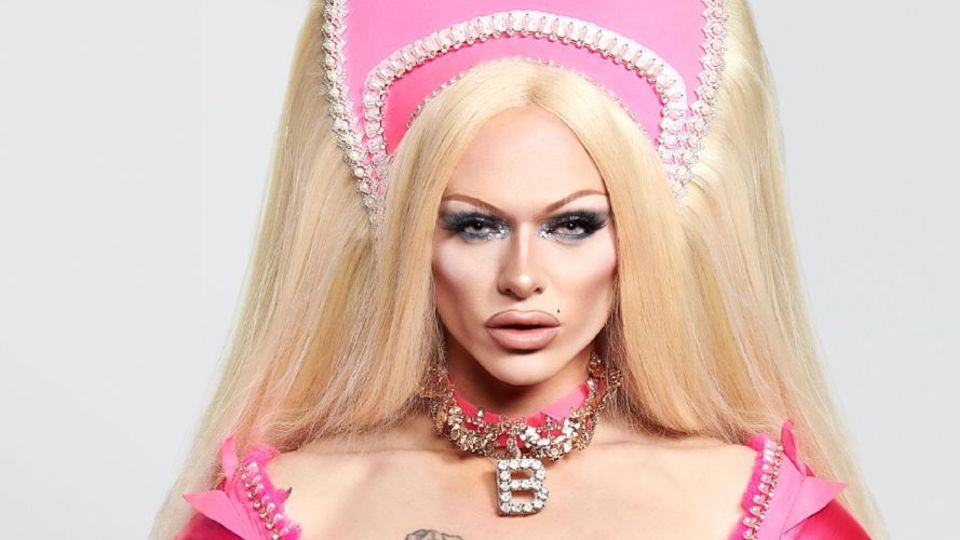
UK Drag Artist Bimini-Bon Boulash’s iconic lyric ‘gender bender, cis-term offender’ not only cemented their status as Drag Race royalty, but also propelled them into the world of high fashion, modelling and music. The non-binary drag queen, who appeared on the second series of Drag Race UK, has been praised simultaneously for their perceptive artistry alongside their raw and personal representation of gender-bending.
Many of our gender-bending icons and our deeper understanding of breaking gendered convention are rooted in the later 20th century, tied in with the sexual politics of the era and the push for freedom of expression. Even when we look beyond this century, our common perception of gender-bending is grounded in individuals, who, unbeknownst to them, have inadvertently become queer icons. The same can be said for feminism, where we often idealise historical figures who have seemingly broken convention and are know the poster children for an entire movement (think Joan of Arc, Boudicca etc.).
Some historians claim that idolising said individuals trivialises a greater struggle and instead perpetuates the idea that they were far from typifying what should be our main focus: everybody else. I personally think there is nothing wrong with championing those who dared to be, but there is also a case to be made for the idea that we overwrite the ‘everyday’ history, which in turn makes us see things like gender-bending as a new phenomenon and affirms the idea that a grey area between masculine and feminine is a modern revelation. And this plays into the outdated and stuffy ideology from many people that there have always been two genders, one acceptable sexuality and it’s a hippie myth to have anything else. In truth, gender non-conformity has always existed – and has been revered in many cultures – but has been twisted by those in power across the world in whichever way suits the narrative of the powerful (and often colonist) male. Shock.
Ancient Greece seems like a good place to start – you don’t have to go far in a Mediterranean gift shop to find a lighter with two men having sex on it. Now almost a satirised element of ancient Greek culture (not always appreciated by some modern communities), homosexuality between men was encouraged in many city states as a rite of passage. In fact, there were rules in place – who you could sleep with, who you couldn’t, all based off the amount of body hair a boy had. In a system now known as pederasty, an older man would mentor a younger man, which included having intercourse. However, this wasn’t considered to be a homosexual act, because the dominant man wasn’t breaking any gender stereotypes by avoiding the passive role. The passive participant was ‘justified’ by considering themselves as not a man during sex. This was the narrative that suited the male aristocracy, and so it was the norm. Outside of these circles, when a man enjoyed passive sex, he was called a kinaidos – a derogatory term originating from a dancer who enjoyed shaking his backside. Political already, but it demonstrates just how gender has always been a malleable concept when it suited the right people.

Crossing continents and ages, in the modern Indian subcontinent, exists the Hijra community. Recognised as a third gender, Hijra are individuals who have typically been born as male, who have in some way transitioned to become neither male nor female (be this through being transgender, intersex, eunuch or just by way of dress). With reference to the group in the Kama Sutra, Hijra have roots in antiquity, having been around for an estimated 4000 years. What is most significant about this group is their reverence from the Hindu community, appearing in ancient Hindu scripture and mythology. It is within these texts Hijra are referred to as a “third nature.” The origin of their reverence is detailed in the epic Ramayana. The story goes that Lord Rama was exiled from his kingdom for 14 years, and so he turns to his loyal subjects and tells them that all men and women should return home rather than follow him to doom in exile. The Hijra, identifying as neither male or female, remained steadfast and were granted Rama’s blessing. Ever since, the Hijra have been worshipped with devotion and seen as demi-deities.
And then the British came along.
When the British colonised India in the mid-19th century, they brought with them the rigidity of their Victorian ideals and iron expectations of sexual relationships, not to mention their violent racism. Viewing the Hijra community as deviant and backward, the British sought to undo an ancient tradition of reverence and replace it with the extinction of such a religiously powerful group. Police were armed with the right to strip Hijra and cut their hair which ultimately forced many into hiding. Their reputation was transformed from one of esteemed auspiciousness into a threat to the rightful order. This has mutated into a far greater issue; the Hijra now represent a marginalised community who have been subject to sexual violence, rape and murder. Recent years have seen attempts to reinstate Hijra in their previous position of reverence, or even acceptance, which is a difficult yet positive step. What their collective story demonstrates is how an ancient appreciation of gender non-conformity was destroyed only when colonial powers saw it as a threat to their own source of male (white, straight) power.

A similar situation prevailed in colonial America, where several Native American tribes upset European colonists because of their matrilineal hierarchy and kinship. Particularly dominant in the South, women took on the roles of hunters, ‘owned’ property, spoke publicly and represented important deities – this perceived backwardness was unsurprisingly treated with contempt by colonial powers and was yet another false justification of their ethnic cleansing of Native Americans. Fortunately, the honoured system of matriarchy has persisted within some tribes, such as within the Haudenosaunee, as does the concept of being ‘Two Spirit’, which is a third state beyond gender. On this note, being ‘Two Spirit’ is deeply revered by some communities.
It’s no revolutionary statement to say that white, masculine power is the problem, but it is deeply troubling to consider how these still permeate what many still vehemently believe about gender. It is even more concerning to know that these entire histories have been destroyed and twisted by the views that some people still hold today. Not just for gender, but in every sense, history has been shaped by the threat to male power.
Looking at the treatment of lesbian relationships under a historical lens is proof of this. The term ‘lesbian’ was only ‘invented’ in the 16th century and even then, it only referred to anything to do with the island of Lesbos, including types of wine. It wasn’t until the later 19th century that it came to mostly refer to homosexual female relationships. And yet, of course, actual lesbian relationships had existed since, presumably, the start of the human race. Sappho of Lesbos (the poet from which the term ‘lesbian’ now ultimately derives because of her homoerotic poetry) actually outdates her own terminology by nearly 2500 years. The non-existence of a term for lesbianism and its relative lack of direct persecution or mention throughout history is founded in sexism. Gay female relationships have been considered near-harmless and not a threat to male power, which ran alongside a complete lack of knowledge about female sexuality and women’s desires in general. Naturally, the suffering of gay women throughout history has been fought out in many other ways, as an avoidance of heterosexual relationships (threatening to male power and sex) was what was considered deviant and bizarre, thus garnering centuries of undue mistreatment.

The Victorian and early 20th century fear of sexual deviancy and a rigid, segregated approach to men and women, is what has cemented the idea that history is limited to a binary understanding of gender. In fact, it is just the narrative that has often suited the colonial and male winners of history, and we are therefore doomed to think this is the only ideology that is standardised.
Since the later 20th century, gender theorists and historians have helped demonstrate the cultural implications on gender and sex, with the greatest recognition being that this is changing all of the time and adapting as our modern understanding evolves. Using a French post-structuralist approach (and therefore able to reach her perceptions without tapping into pre-established conventions), Joan Scott was able to query in the 1980s the meanings given to the perceived difference between the sexes and how this relates to our understandings of power. Judith Butler is another pioneer in the field, again trailblazing the idea of cultural implications on gender and gender performativity. These ground-breaking works are widely recognised as the kickstarting of a new understanding of gender; and the growth of this academic field is promising as it gives us a greater chance to reconsider and reinvent our outdated perceptions of historical belief.
Our greater understanding is positively reflected in the increased non-binary representation in our popular culture. More significantly, it is the wider cultural comprehension that a dichotomy of gender is far from the norm – there is no doubt a far way to go, but perhaps the recognition that a gender binary has never been true is a good place to start. Success will have occurred when the cis-tem is no longer taking offence at the expression of true identity.
Writing this as a cis-gendered woman, I am always open to learn much more and really value any people pointing me in the direction of further resources and opinions to give myself a well-rounded view.


Comments